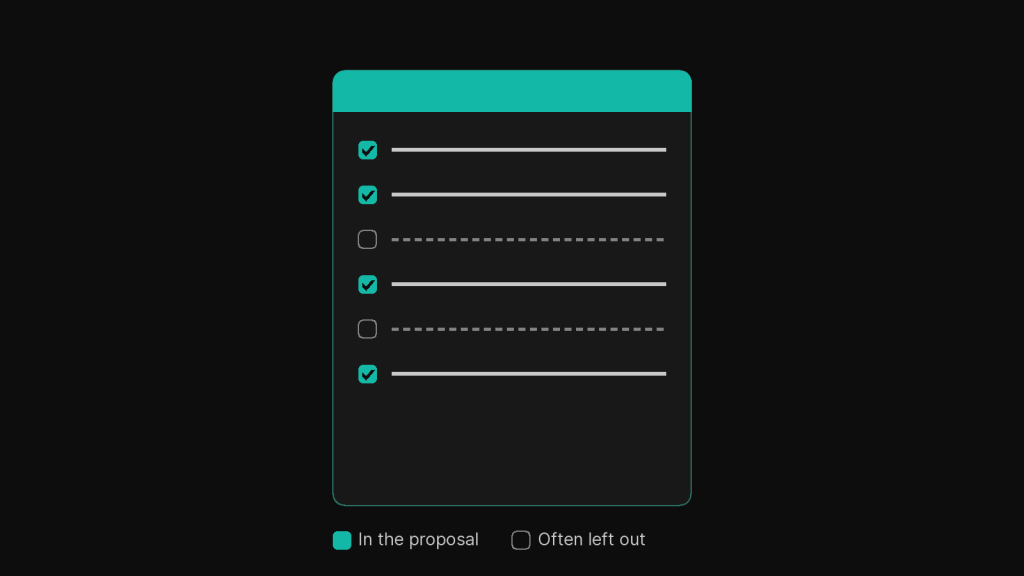
Most SEO proposals read well. They are usually well designed, confidently written, and structured around a clear-sounding plan. That is exactly why it is easy to miss what they leave out. A proposal can tick every box you expected to see and still fail to answer the questions that matter most once the contract is signed and the work begins.
The gaps are rarely dishonest. They are usually just the parts of the document that are harder to write, because they require the agency to commit to something specific rather than describe an approach in general terms. This article looks at what tends to be missing, why it matters, and how to ask for it before you sign anything.
A Proposal Can Look Complete and Still Leave Gaps
A typical proposal covers strategy, a summary of deliverables, a price, and some client examples. That structure is familiar enough that it reads as thorough, even when several of those sections are light on specifics. The strategy section explains an approach rather than a plan for your business. The deliverables list says what will happen without saying how much, how often, or by whom. The price is clear, but what it buys is not. The price is usually the one section people feel able to judge on sight, and the one that means least without context. Our guide to how much SEO should cost in the UK gives you benchmarks to read it against. Our free SEO cost calculator will also tell you whether the figure is in a typical range for your business.
None of this is necessarily a problem with the agency. Proposals are sales documents, written to be read quickly and to build confidence. The detail that protects you as a buyer often lives in a follow-up conversation, a contract, or a scope document that has not been written yet. The trouble is that many businesses sign based on the proposal alone, assuming the missing detail will simply appear later.
The Gaps That Show Up Most Often
Across proposals from different agencies, the same handful of omissions turn up again and again. None of them are unusual on their own. Together, they are what make it hard to hold an agency to what you thought you were buying.
- A baseline of where the site currently stands, so improvement can actually be measured against something
- Specific deliverable volumes and cadence, rather than general categories of work
- A named point of contact, rather than “a dedicated team”
- What reporting will actually contain, beyond a promise that it will be “regular”
- What counts as success, and over what timeframe
- Contract length, notice period, and what happens to your data and accounts if you leave
Our SEO proposal red flags checklist covers the warning-sign version of this list, the things that suggest a proposal is actively worth questioning. This article is about the quieter version: the gaps that are not red flags exactly, but that leave you without a clear standard to hold the work to later.
Why These Gaps Are So Common
Agencies are not usually trying to obscure anything. A proposal is written before the relationship starts, often for a prospect who has not yet committed, so it is pitched at the level of approach rather than operational detail. Writing a fully specified scope for a client who might not sign is a lot of unpaid work, and most agencies save that detail for the onboarding stage instead.
That is a reasonable way to run a sales process. It is a less reasonable way to make a decision worth several thousand pounds a year. The fix is not to demand a full scope document before the first conversation, but to ask that the specific points below are confirmed in writing before you sign, rather than assumed to follow on naturally once the retainer starts.
Four Gaps Worth a Closer Look
No Current-State Baseline
Improvement only means something relative to a starting point. A proposal that promises progress without recording where your site, rankings, or traffic currently stand makes it difficult to check that promise against reality in six months. Ask for the baseline to be written down before work starts, not described loosely after the fact.
Vague Deliverable Cadence
“Content creation” and “four articles a month, each briefed against a target topic and reviewed before publishing” describe very different commitments, even though the first could easily be shorthand for the second. The proposal should tell you which one you are actually getting, in writing, before you sign.
Reporting That Describes Activity, Not Outcomes
A report that lists tasks completed tells you the agency has been busy. A report that connects those tasks to rankings, traffic, or enquiries tells you whether the work is having an effect. Proposals rarely specify which one you will receive each month, and the difference matters more than almost anything else in the document.
No Exit Terms
Notice period, any exit fee, and who retains ownership of your data and accounts if you leave are commercial details, not technical ones, and they belong in the proposal rather than buried in a contract you only see after signing. Our piece on questions to ask an SEO agency before you sign covers how to raise this without it feeling adversarial.
| What a Proposal Usually Says | What’s Often Missing |
| “We’ll improve your search visibility” | A defined baseline to measure that improvement against |
| “Ongoing content and technical work” | Specific volumes, formats and a monthly cadence |
| “A dedicated team” | A named contact you would actually deal with |
| “Regular reporting” | What the report contains and how it links to results |
| “12-month partnership” | Notice period, exit fee, and data or account ownership on leaving |
A proposal that reads well is not the same as a proposal that commits to anything. The difference only shows up when you ask it to be specific.
How to Ask for What’s Missing
You do not need to challenge an agency’s competence to ask for these details. A short, direct set of follow-up questions usually does the job.
- “Can you record where we currently stand before work starts, so we have something to measure against?”
- “Could you break ‘content’ and ‘technical work’ down into specific volumes and a monthly schedule?”
- “Who would be our main point of contact day to day?”
- “Could I see a sample report, so I know what we’ll actually receive each month?”
- “What’s the notice period, and what happens to our data and accounts if we leave?”
A reasonable agency will answer these without hesitation, usually by adding a page to the proposal or confirming details over email. Reluctance to put specifics in writing is worth noting, even if the eventual answer sounds fine.
Before You Sign
A proposal is a starting point for negotiation, not a finished commitment. Filling in the gaps above before you sign costs you one follow-up email and a short wait for a reply. Skipping that step costs you the ability to hold the agency to anything specific once the work is underway. Our guide on how to choose an SEO agency covers the wider process if you are still weighing up more than one option.
If you would rather have an independent read on what a proposal does and does not commit to, that is what our SEO Proposal Review is for.
More on SEO Proposals & Contracts
How to Evaluate an SEO Proposal: A Complete Checklist
How Much Should SEO Cost? Setup Fees and Monthly Costs
What Should an SEO Proposal Include?
SEO Proposal Red Flags: The Checklist to Run Before You Sign
How to Compare SEO Agency Proposals Side-by-Side
How to Compare SEO Agencies: A Practical Scoring Framework
Not sure what your proposal actually commits to?
Our SEO Proposal Review gives you an independent, plain-English breakdown of up to two proposals, flagging what’s missing and what it means for you before you sign.