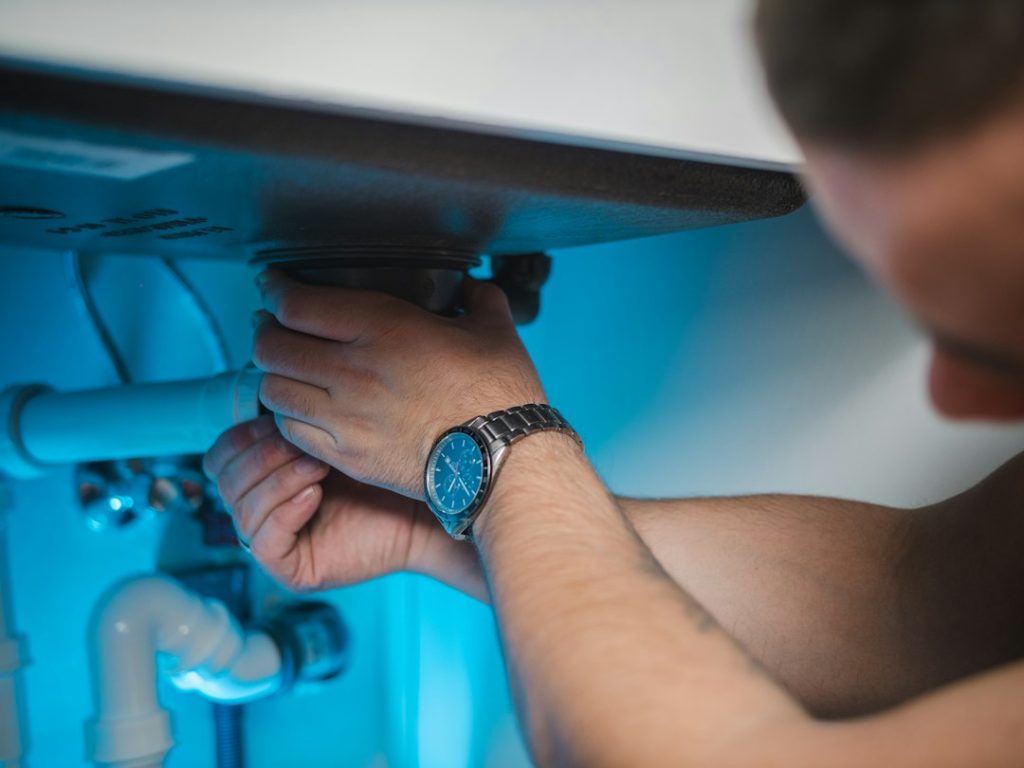
At 7am on a Monday in January, a homeowner with no hot water searches “emergency plumber near me”. The same week, another homeowner asks ChatGPT for “a Gas Safe engineer in Leeds who can replace a combi boiler before Christmas”. The first needs someone within the hour. The second has a few days and a budget of several thousand pounds. Both will pick from a handful of names, and most plumbers and heating engineers have little idea how those names get chosen.
This guide is for plumbing and heating business owners who want to understand that choice, in Google and in AI answers. It’s the second in our series on how local service businesses get found online, following our guide to SEO for garages and mechanics.
How Customers Search for a Plumber or Heating Engineer
Plumbing and heating searches split into two kinds, and they reward different things.
| Emergency jobs | Planned jobs | |
|---|---|---|
| Examples | Burst pipe, leak through the ceiling, no heating, no hot water, blocked drain | Boiler replacement, annual boiler service, bathroom refit, heat pump, landlord gas safety certificate |
| Typical search | “emergency plumber near me”, “boiler repair today [town]”, “24 hour plumber” | “combi boiler replacement cost [town]”, “Worcester Bosch installer [town]”, “heat pump installer near me” |
| What the customer looks at | Map results, star rating, whether you cover their postcode, a phone number, a call-out price | Reviews that mention similar jobs, accreditations, a guide price, finance or grants, how quickly you can start |
| When demand peaks | Cold snaps and the first frosts, when boilers that sat idle all summer fail | Autumn, before winter, and whenever grant schemes change |
Emergency work is won in the map results, in minutes. Planned work, especially boiler replacements and heat pumps, is where a smaller firm can take high-value jobs from a bigger one, because the customer has time to compare.
What Google and AI Use to Choose a Plumber
The sources are much the same as for any local business. BrightLocal’s analysis of around 200,000 local searches in ChatGPT, Google AI Mode and AI Overviews found that business websites made up about 42% of citations and Google Business Profiles about 29%, with reviews and directories making up much of the rest. Home services were the sector where AI answers leaned on outside sources the most.
Plumbers have one complication most shops don’t: you probably work from home or a yard, not a shopfront. That makes you a “service-area business” in Google’s terms.
- Hiding your home address is allowed, and expected. If customers don’t visit you, set your Google Business Profile up as a service-area business and hide the address. Local search specialist Darren Shaw of Whitespark is clear that showing or hiding it doesn’t affect rankings in itself.
- Your service area doesn’t decide where you rank. Listing 40 towns won’t make you appear in all of them. In practice you rank most strongly within a few miles of your verified address. To win work further out, you need pages on your website about those areas and reviews from customers there.
- Accreditations are evidence AI can read. Your Gas Safe number, WaterSafe or MCS membership, and manufacturer-approved installer status are facts a customer, and an AI tool, can check. Put them on your website in plain text, not only in a logo image.
The Gaps Most Plumbing Firms Leave Open
There were 47,910 plumbing, heating and air-conditioning businesses registered for VAT or PAYE in the UK in March 2026, and 86.5% of them had four or fewer employees, according to ONS figures compiled by Whito, a firm that sells marketing to trades. Most are small firms competing with each other, not with national chains. The same source checked plumbing websites and AI answers in autumn 2026. Treat its findings as a signal rather than national figures, but they point to two clear gaps:
| What was checked | Result |
|---|---|
| Emergency plumber websites that published no call-out price (179 sites, October 2026) | 65% |
| Plumbers named by ChatGPT and Gemini that matched an active local company at Companies House (75 names, September 2026) | 45% |
The first gap means most emergency plumbers leave the customer’s main question, “what will this cost me to get you out?”, unanswered at the moment they’re deciding. The second means that more than half the plumbers AI tools recommended couldn’t be matched to an active local company. AI answers are patchy and often out of date. A firm that gives them clear, consistent, current information has a real chance of being the name they get right.
A worked example: two heating engineers in the same town
Firm A has a 4.9-star rating from 95 reviews, most of them from more than a year ago. Its website has one page saying “all aspects of plumbing and heating”, with a mobile number and a contact form. Its Google profile lists 30 towns as its service area.
Firm B has 4.7 stars from 48 reviews, six from the last month, several mentioning “new combi boiler” or “no heating, fixed same day”. Its site shows a call-out charge of £85 including the first half hour, a guide price for a like-for-like combi swap, its Gas Safe number and manufacturer-approved installer status. It has separate pages for boiler repair, boiler replacement, servicing and the three towns where it does most of its work.
The money is in the planned work. Using illustrative figures: if B’s clearer pages and fresher reviews win one extra boiler replacement a month at £2,800, that’s around £33,600 a year in extra revenue, before servicing contracts and repeat work. One extra emergency job a week at an average of £180 adds roughly £9,000 a year on top. A is the better-rated firm on paper. B is the one that answers the questions customers and AI tools are asking.
Emergency customers want to know “can you come, and what will it cost?”. Boiler customers want to know “can I trust you with £3,000?”. Your website should answer both.
The Monthly Checklist for Plumbing and Heating Owners
An hour or two a month, done consistently, covers most of what matters.
Google Business Profile
- Choose the primary category that matches most of your work (plumber, or heating contractor), and add the others that genuinely apply.
- Set it up as a service-area business with your home address hidden, and list the towns you really cover rather than every town within 30 miles.
- Keep your hours accurate. If you offer an emergency service, say exactly when it runs.
- Add photos of real jobs: the finished boiler install, the tidied-up airing cupboard, the van. Ask the customer first.
Reviews
- Text a review link when you finish the job, while the customer is still relieved. It works far better than asking weeks later.
- Ask customers to mention what you did (“replaced our combi”, “fixed a leak under the sink”). Reviews that name the job help you appear for that job.
- Reply to every review, including the poor ones, calmly and specifically.
- Never buy reviews or offer money off in return for them. It breaks Google’s rules.
Your website
- Give each main job its own page: emergency plumbing, boiler repair, boiler replacement, boiler servicing, landlord gas safety certificates, and heat pumps if you’re MCS certified.
- Publish a call-out price and guide prices, with a line on what changes the cost.
- Show your Gas Safe number and other accreditations as text, with a link to where customers can check them.
- Add a short page for each of the two or three areas where you most want work, with a real job you’ve done there.
Listings and the AI check
- Check that your business name, phone number and website match on Google, Bing Places, Apple Business Connect, Checkatrade or similar sites, and Companies House if you’re a limited company.
- Once a month, ask ChatGPT and Google the same three or four questions a customer would (“emergency plumber in [town]”, “who can install a combi boiler in [town]”). Note who gets named. Our guide to checking whether you’re cited in AI Overviews shows how without paid tools, and AI Mode vs AI Overviews explains why the results differ between tools.
Heat Pumps and Specialisms: Your Best AI Angle
People ask AI tools longer, more specific questions than they type into Google: “heat pump installer near York who handles the grant”, “plumber who fits underfloor heating in old houses”. A firm that states clearly what it specialises in gives the AI something specific to name it for.
Heat pumps are the clearest case. Ofgem had issued 106,185 Boiler Upgrade Scheme vouchers by the end of September 2026, and in March 2025 just over 2,000 contractors held MCS heat pump certification, figures also gathered by Whito. That’s a small pool of firms for a growing number of searches. If you’re certified, say so on its own page, explain how the grant works, and show an installed example.
If You Hire Help: What to Expect
Most plumbing firms don’t need a large SEO campaign. They need the basics above done properly and kept up. Our buying guide for trades and home services businesses covers choosing a provider in more depth, but here’s the short version.
| Sensible work for a plumbing firm | Worth questioning |
|---|---|
| Setting up your Google profile correctly as a service-area business | Promises to rank you across a whole county |
| A simple, repeatable way to collect reviews after each job | Dozens of near-identical “plumber in [town]” pages |
| Service pages with prices, accreditations and real jobs | Blog posts on general DIY plumbing tips |
| Cleaning up your listings so details match everywhere | “AI visibility” sold without saying how it will be measured |
| A monthly report on calls, enquiries and boiler leads | Reports full of traffic graphs with no mention of enquiries |
Our guide to how much SEO should cost gives typical UK price ranges. If you’re already busy and mostly need someone keeping watch, SEO retainer vs SEO campaign explains why a lighter monthly arrangement often suits a local firm better. And if a proposal promises results in AI search, read GEO vs SEO first, then run it through our proposal red flags checklist.
Frequently Asked Questions
Should I show my home address on Google?
If customers don’t come to you, no. Set your Google Business Profile up as a service-area business and hide the address. That’s what Google expects for a mobile trade, and it doesn’t harm your rankings in itself. You’ll still rank most strongly near where the business is verified.
Should I put a call-out price on my website?
In most cases, yes. It’s the first thing an emergency customer wants to know, and most competitors don’t show it. A clear call-out charge, with a line on what it includes, builds trust and filters out people who were never going to book.
Can I appear in ChatGPT or Google’s AI answers without a shopfront?
Yes. AI tools draw on your website, your Google profile, reviews and directory listings, not on whether you have premises. Clear service pages, visible accreditations and consistent details across your listings give them the information they need. Nobody can guarantee you a place in those answers, so be wary of anyone who says they can.
Where to Start This Month
If you do three things this month, make them these: set your Google profile up properly as a service-area business, start asking every customer for a review that mentions the job, and put a call-out price and your Gas Safe number on your website. Then run the AI check, and repeat it next month. Before the next cold snap is the best time to do it.
If you’d rather have someone keep an eye on it for you, our SEO Retainer covers monthly checks, small fixes and a plain-English report. If you’ve been sent an SEO proposal and want to know whether it’s the right work for a plumbing firm, our SEO Proposal Review will tell you before you sign.
More on GEO & AI Search
What Is GEO, AEO and AIO? A Plain-English Guide to the Latest AI SEO Labels and Terms
How Much Should SEO Cost? Setup Fees and Monthly Costs
GEO vs SEO: Is Your Agency Selling You AI Visibility It Can’t Prove?
AI Mode vs AI Overviews: Why Citation in One Doesn’t Mean Citation in the Other
How to Check If You’re Being Cited in AI Overviews (Without Ahrefs or SEMrush)
Google’s New AI ‘Information Agents’ in Search: What It Means for Your SEO Proposal
Too busy on jobs to keep on top of this?
The SEO Retainer gives you monthly checks on your Google profile, reviews, rankings and AI answers, small fixes and a plain-English report, from £249 a month with no minimum term. Holding an agency proposal instead? Get it independently reviewed before you sign.